
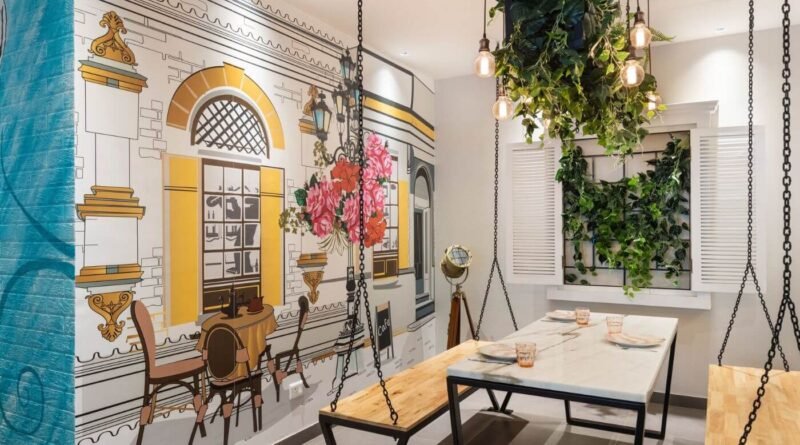
18 Restaurant Interior Design Ideas
Ever visit a restaurant and love the atmosphere there, wonder, feel at home, or desire to have a nice cup of coffee? Human beings like to identify themselves with something, hence theme restaurants or restaurants that have an identity are usually more successful compared to others. Some of the factors that matter in the interior design of a restaurant include the scale, colors, texture, and light, among others. This article discusses extraordinary Restaurant Interior Design Ideas that are applied in various sections of the world.
It is more than just appearance in the restaurant interior design industry; it forms the silent composer of an eating symphony so memorable. It’s proper mood makes the meal more engaging, allowing guests to enjoy their meal and the ambience. Get to know more about practical ideas to guide in arranging a memorable dining experience where a customer will be left enchanted and will revisit a similar occasion.
Restaurant Interior Design Ideas
1. First Impressions Matter
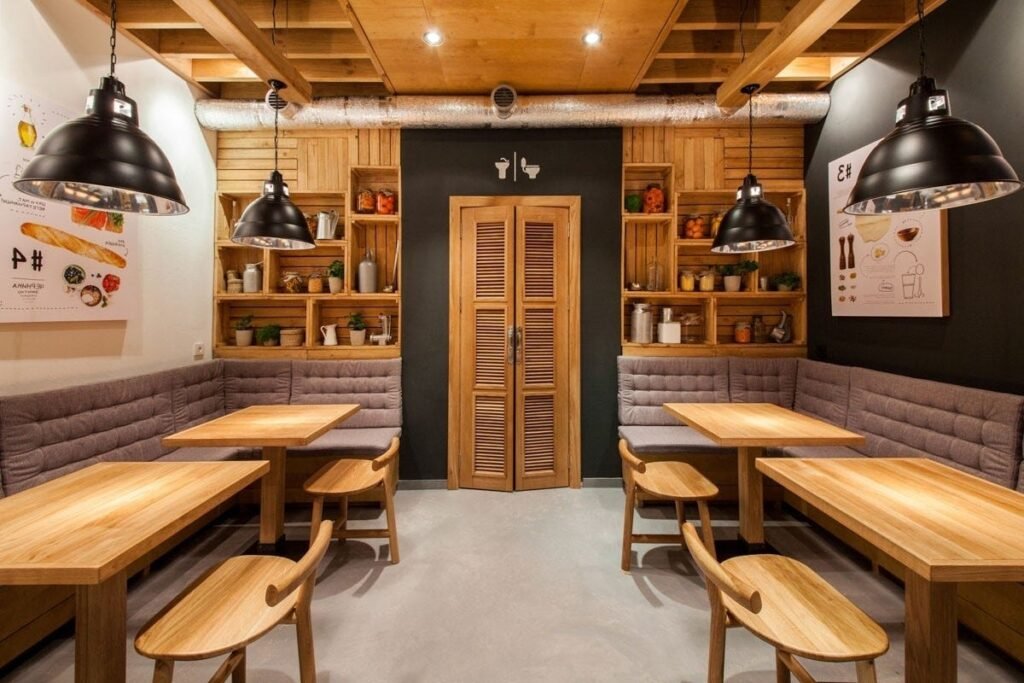
The establishment of the right ambiance that will give a memorable experience to the customers by a well-decorated restaurant at the entrance of the restaurant will leave a lasting impact on the customers. Careful interior design does not just augment a visual appeal, but also affects mood, comfort and increased contentment. The layout of lighting and seating, color scheme, and the personal details of the decor are all aspects adding to the ambiance. This is so because a good interior design will make your brand name, attract more clientele and make them come back to visit again; therefore, design is quite an important ingredient of a successful restaurant.
2. Sustainable Materials for Eco-Friendly Dining
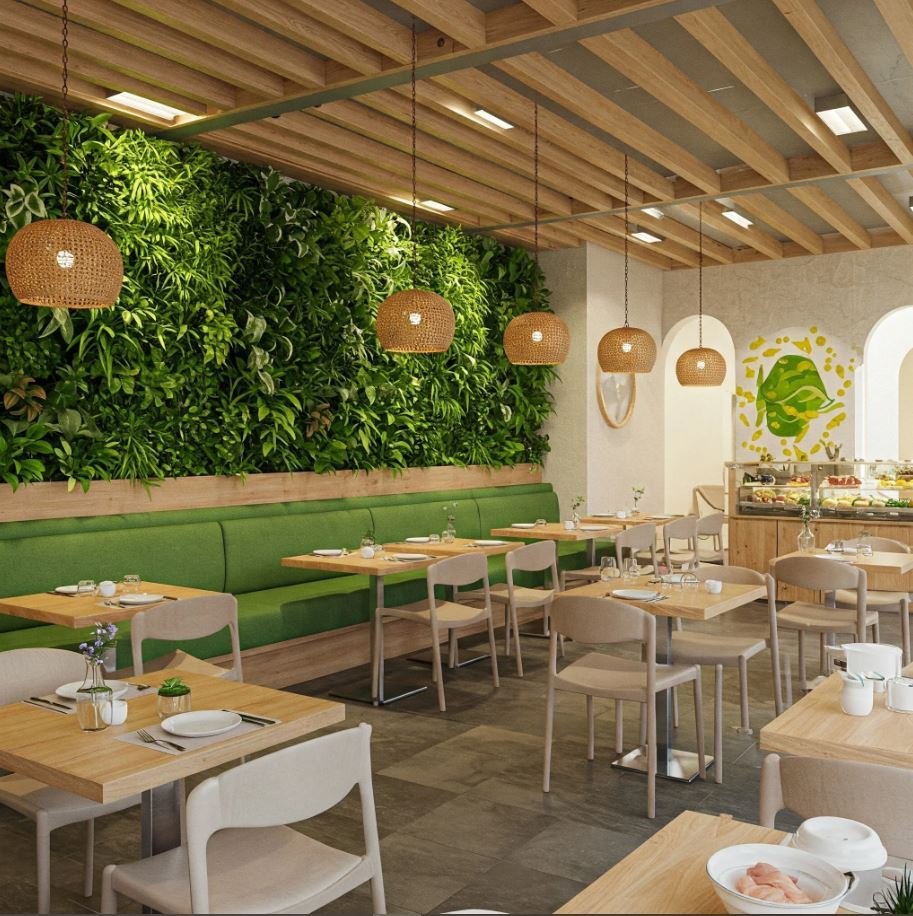
The modern restaurant interior design ideas philosophy is founded on sustainability and is slowly changing towards the incorporation of the usage of more environmentally-friendly material and practices. The designers are trending towards the use of reclaimed wood as well as bamboo, recycled steel, and low-VOC paint to interior design the trendy spaces responsibly. As an example, tabletops made of recycled barnwood do not only help in lessening environmental waste but also add a homely Southwestern look to the interior. It is a factor that environmentally conscious customers would be drawn to, as it enhances brand image, and works towards sustainable living, being not only an ethical action but also a brilliant marketing move.
3. Choose a Memorable Theme
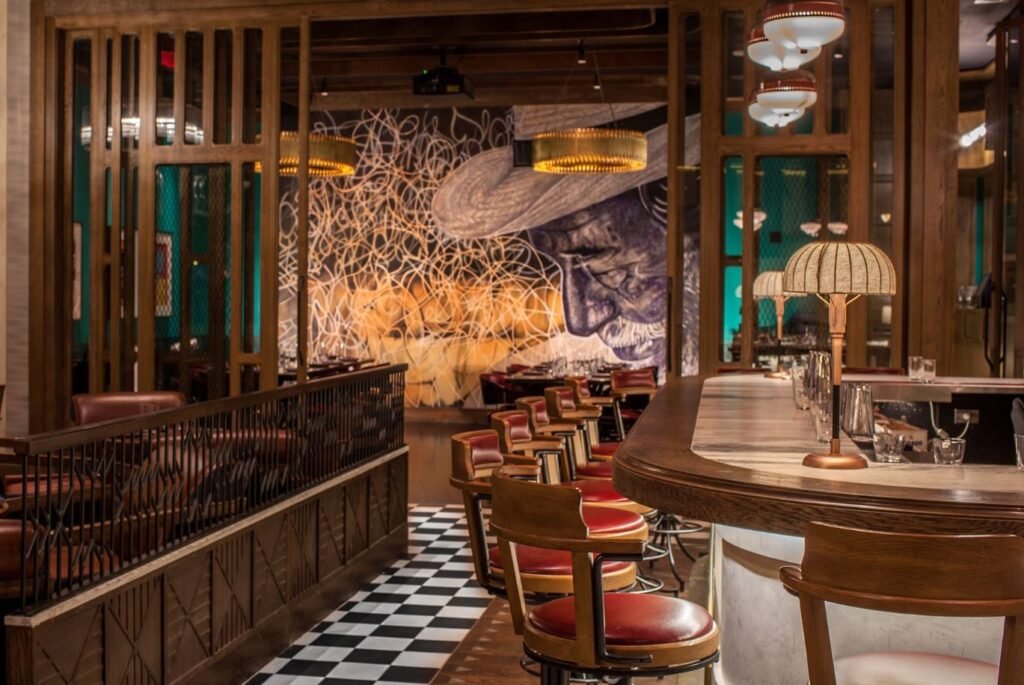
The theme of your restaurant is the basis of your whole interior design strategy as it will dictate the overall mood of the eating experience. The first thing to start with is to pick the idea that will be very representative of your cuisine and brand identity. The type of interior decor; be it industrial, farm-to-table, tropical, a vintage diner atmosphere, or art deco luxury, it is essential to be consistent. All the details like furniture and lighting, even uniforms of the staff and menu design, must be consistent with the selected theme. This integrated solution not only improves the aesthetics, but also makes a spectacle and an experience your guests will not forget.
4. Statement Wall Murals with Tile Borders
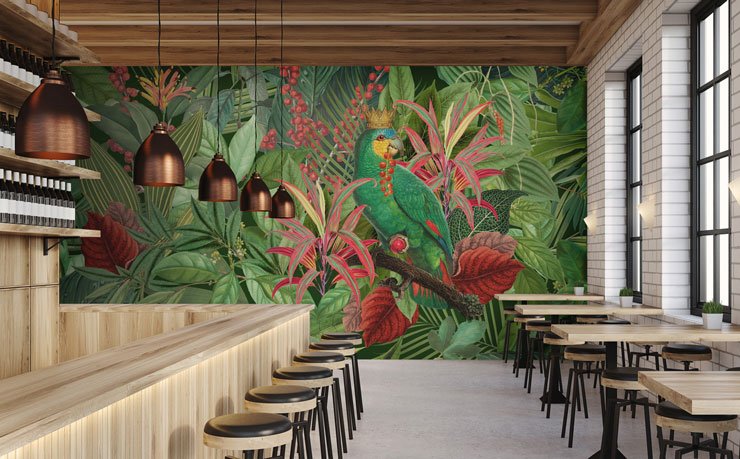
Custom murals with artistic tiles create a unique life to your restaurant and will immediately attract everyone to look at them. This imaginative interior design strategy infuses personality, dramaticism and a distinctive aesthetic look on your space making it more remarkable to visitors. Your brand can be reflected through a mural inspired by a culture, nature or an abstract work of art. Together with decorative tiles, they create a spectacular centre. This plan is highly perfect in the background of the reception or within the dining hall, to make atmosphere and enhance the overall dining experience.
5. Ceiling and Wall Art Based on a Theme
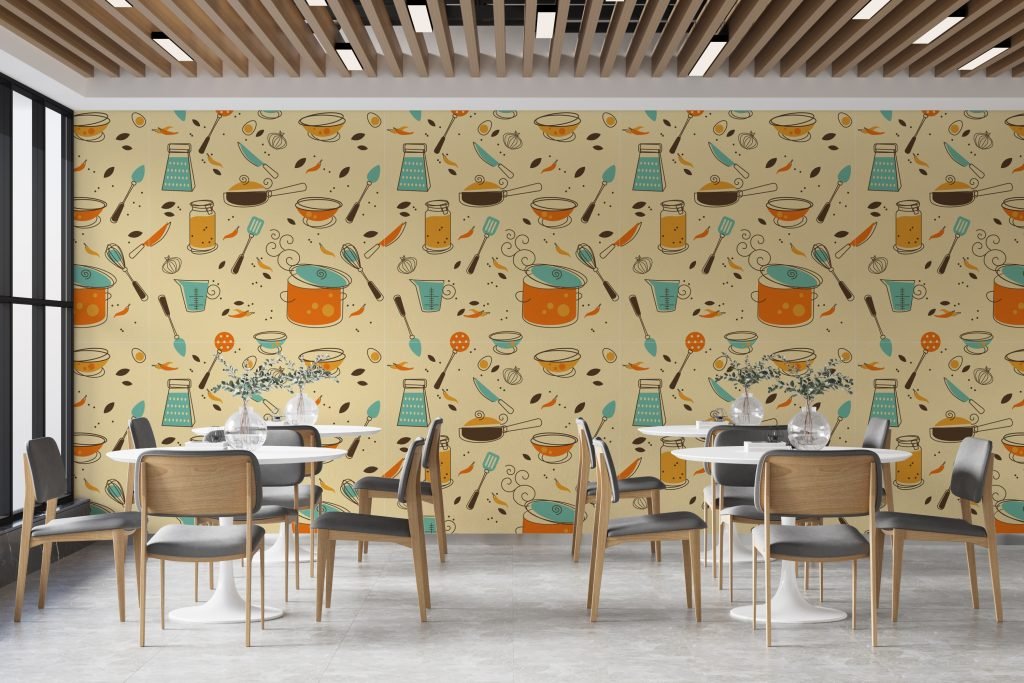
Good restaurant interior design ideas companies will inform you that you can never leave the ceilings dull and a bore. That will have your restaurant appear low-class. One popular notion is integrating ceiling and wall art into a single theme. One such example is a vegan restaurant that painted their walls and ceilings green trying to depict a birch forest thus making the people feel like they are under trees.
6. Warm Ambient Lighting
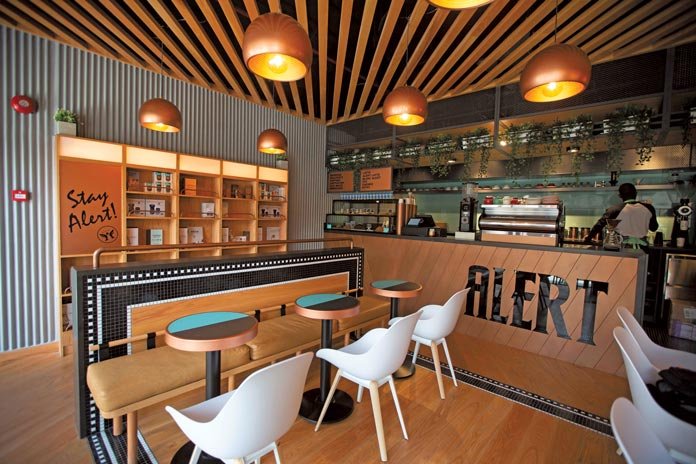
It is in the lighting that the mood is established. Combine pendant lights, Edison bulbs and fairy lights. These bring a warm and inviting ambience that encourages the customers to linger. Lighting is an essential component of a restaurant interior design ideas. It often incorporates a special mix of electric and natural sunlight to a calming effect on the eyes.
Also, the correct light colours are also essential because they could significantly influence the swinging moods and emotions of the clients. Being a restaurant owner, you need to make sure that the lights are adjustable to suit the space and colours. As an example, in case of late evening dinners, you might wish to use a tabletop light in a semi-dark room to make a romantic and intimate atmosphere.
7. Choose your restaurant decor colors
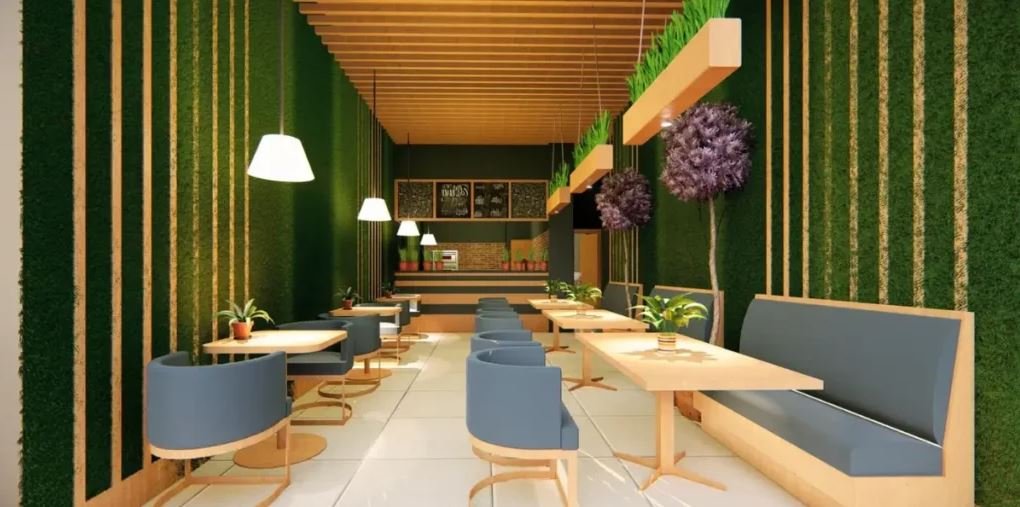
There is a wide variety of emotions that can be depicted by colors. It is not that when you utilize the psychology of colors, you will be able to convince the customers to buy more. However, it is not bad to strive to get them on the right track, right? Red, brown, green, orange, yellow, blue and purple are the most suitable restaurant wall colors. These may appear to be all the colors, but how you utilize them and in what combinations is crucial.
8. Keep it minimalistic and sophisticated
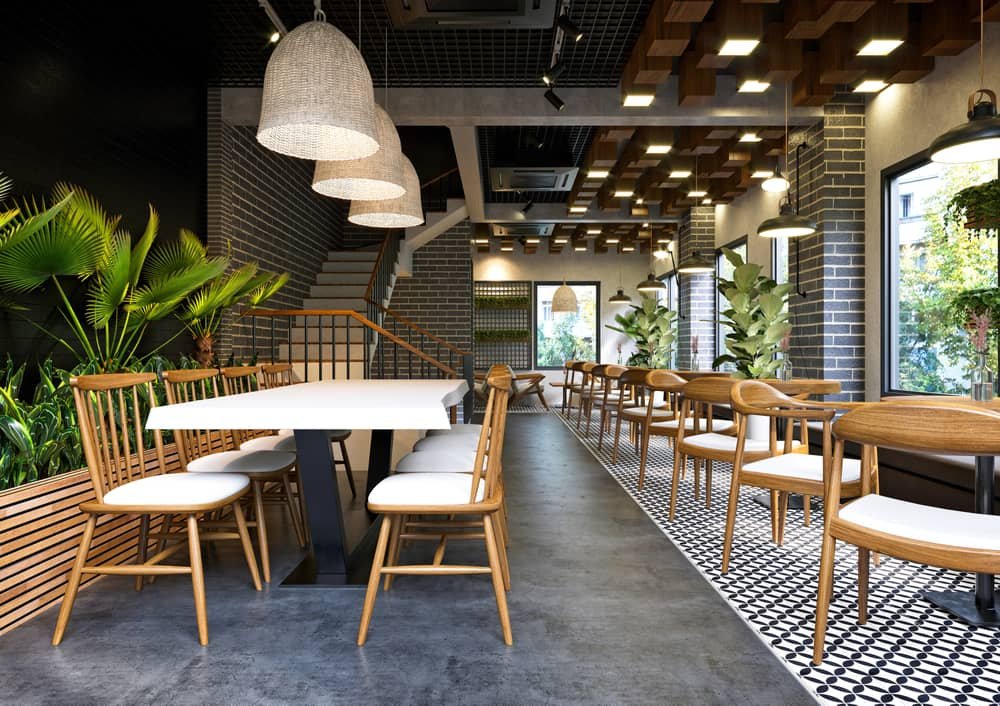
Nowadays, minimalism is rather a philosophy of design than a trend. The decoration of your restaurant should be plain yet effective and typical. Reduce visual clutter and have fewer distractions. Although the decoration should be minimalistic, attempt to be extraordinary in the use of objects like a neutral color plate, smooth interior furniture, and others that complement each other. As an example, simple table setups, light wood furniture and barely noticeable accents in lighting does not overstimulate the senses with the elegance it offers.
9. Prioritise Functional Layouts
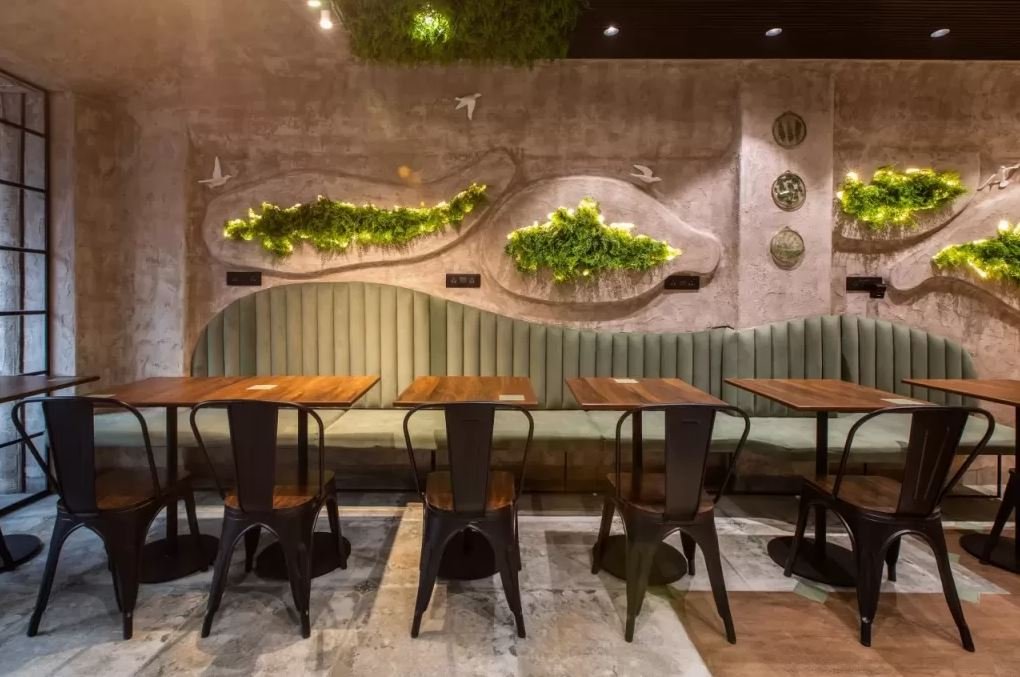
A good dining experience depends on an effective layout. The appropriate layout of the space will ensure a smooth flow of traffic of customers and employees and will make the most of the seating area. Establish different areas of food preparation, waiting and dining to prevent congestion. Add built-in flexible seating like moveable tables or convertible vendor seats to take into account groups of different sizes. See to it that your space is made welcoming to everyone so that they comply with the accessibility standards.
10. Consider The Impact Of Plants
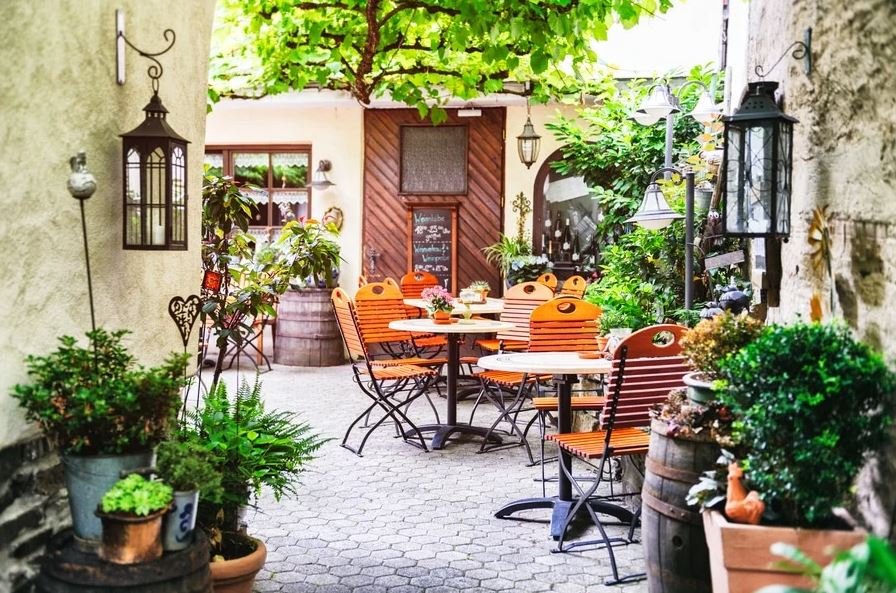
The mood can easily be created by adding more greenery to your restaurant. Without consuming large areas of space, indoor plants can be used to add atmosphere to an establishment with a small restaurant. Some climbing houseplants, such as a philodendron or pothos, would also be suitable, and shelves need to be placed high. Another excellent addition to any unused floor area is large ferns. Such indoor plants will provide a splash of bright colors without consuming a lot of space. They also aid in the purification of air.
11. Choose Proper Furniture
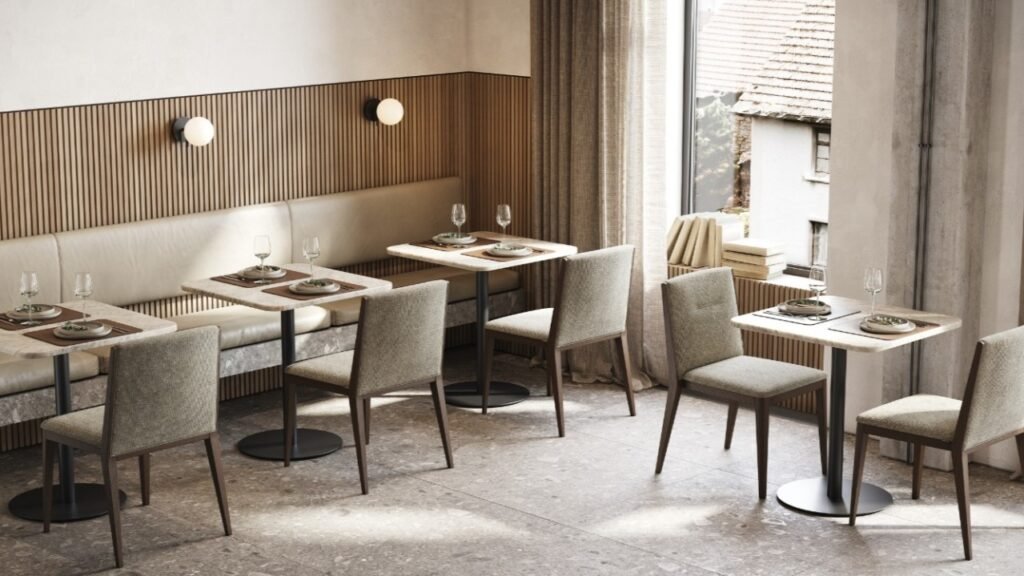
Select furniture that complements your theme and also suits your requirements, in terms of appeal and comfort. Chairs, booths or both may be used, but ensure that the seats are comfortable to sit on for long. Select durable materials as well that would be able to manage the wear and tear of a busy business.
12. Eye Catching Signage
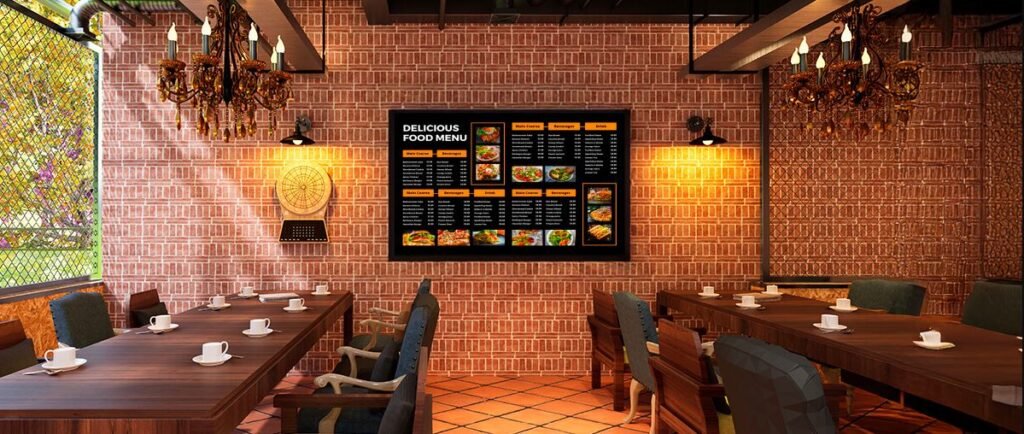
It is all about beautiful interior design so that people will be attracted to get into your restaurant first. Exterior signage is very important because it gives the initial impression to people when they pass by. A catchy sign ought to be attention-grabbing, attractive, and must depict your brand identity. It serves as an aesthetic preview, steering customers and giving them an idea of what to expect before they can even step in. Signage properly implemented is more than mere eye-catching; it will make sure that the guests get a sense of knowing they are going into the correct establishment, as well as having improved visibility and addition to the overall customer experience.
13. Industrial Chic Design for a restaurant
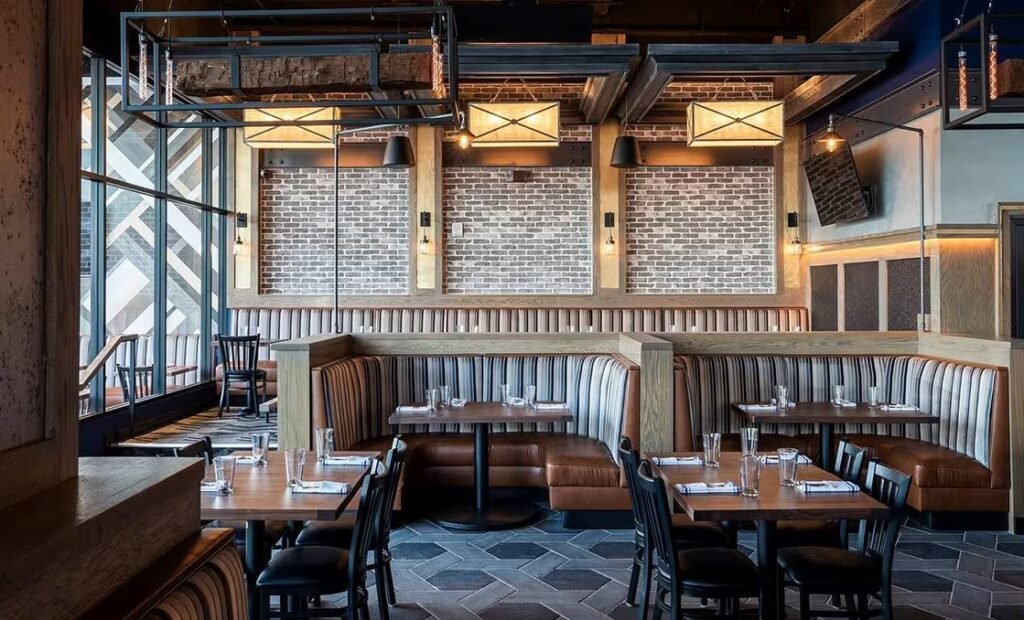
This style has an urban, rough edge, with exposed brick walls and metalwork, and open ceilings. Visualize Edison bulb lightings, concrete floors, and reclaimed wooden tables. It is ideal in restaurants that desire the trendy and no-fuss appearance. The incomplete and at the same time fancy touch gives it a carefree ambience, which is perfect at casual restaurants and craft beer joints.
14. Create an Accent Wall
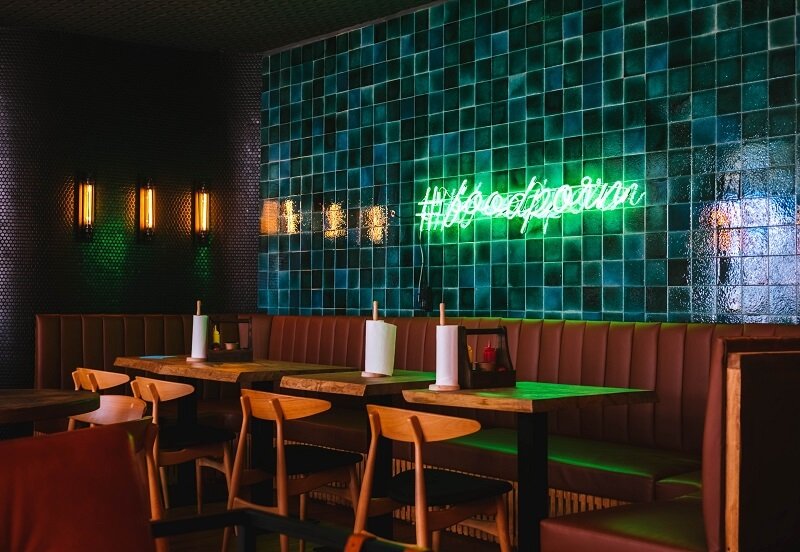
One of the trendiest restaurant interior design ideas is accent walls, since it increases the brand image. You could use the colors of your restaurant as the brand colors to reveal your brand personality and reaffirm your interior design theme. Attempting to combine various textures and patterns creatively to get a unique accent wall, which not only will be aesthetically pleasing but can also prove interesting to the diners. You may even decide on a detailed mural to make a point.
15. Material Selection and Texture
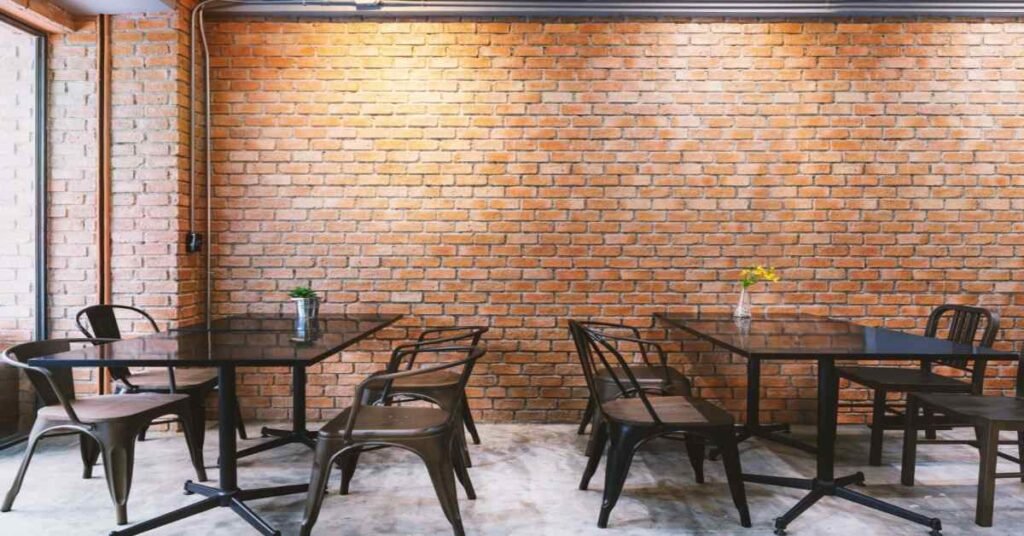
In 2026, there is a demand for sustainable and environmentally friendly substances. The reclaimed wood, bamboo, cork, and recycled metal are popular wood furniture products. Such materials are also more environmentally friendly, but also radiate a feeling of genuineness and handiness, which is attractive to conscious shoppers. Some of the contrasting textures that may be used include rough brick and smooth marble or polished wood and raw concrete, which would add depth to the field and also be aesthetically pleasing. The mixing of very soft fabrics, such as velvet seating, with the elements made of metal or wood creates the illusion of touch, creating more comfortable and vibrant spaces.
16. Focus on the entrance/lobby area
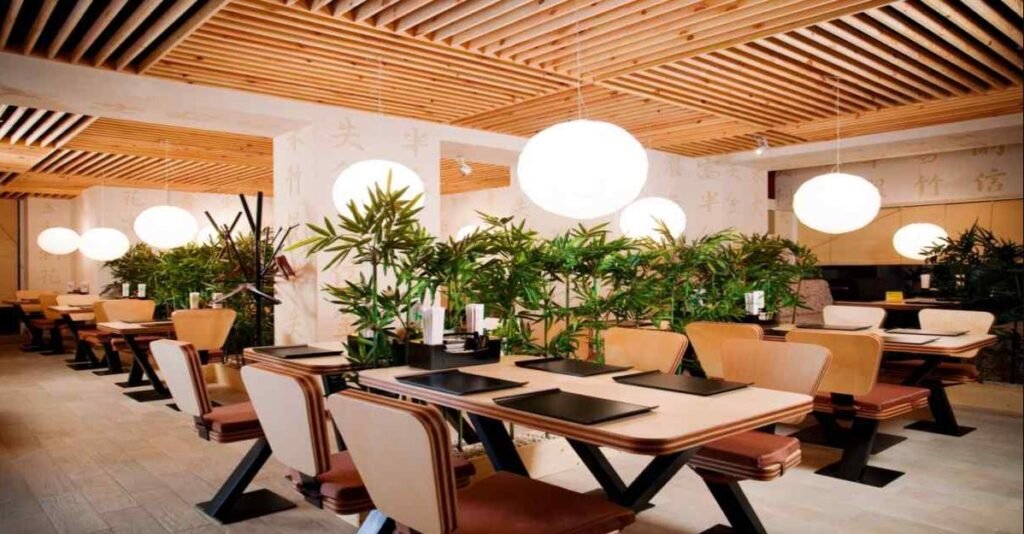
It goes by the saying that once the first impression is made, you can never get a second chance. To a large extent, you can apply this advice to your lobby and front entrance. Factors like your decoration and color scheme will pre-determine overall aesthetics. Other details like the seating secure to the people waiting to be served at a table and how well your lighting works are rather functional and comfortable. All are important.
17. Highlight the Kitchen
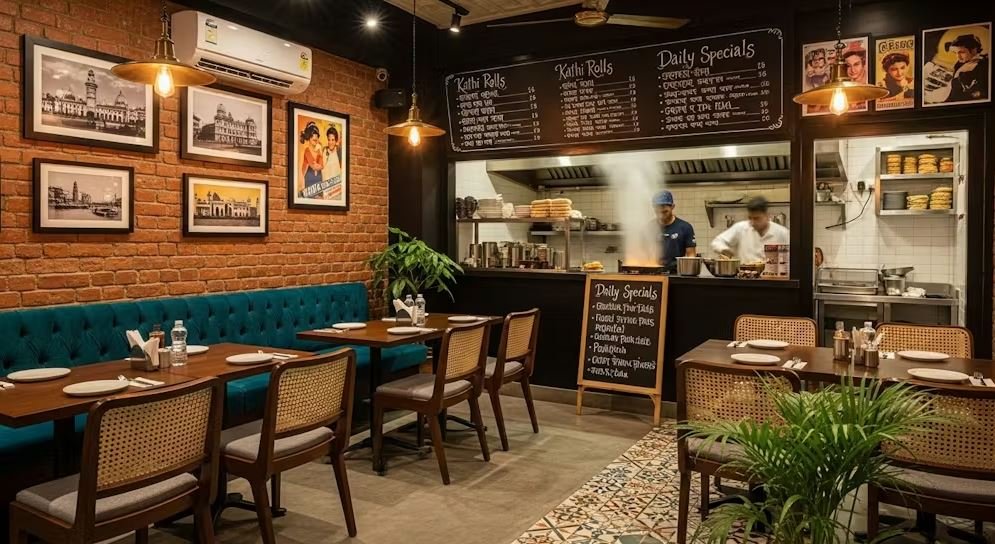
Prejudice your kitchen to be a big place. The theme of open kitchen restaurants is on the increase. Exposing your kitchen to the customers will create a perception of transparency and confidence. Transparent kitchens enable diners to observe as their edibles are being prepared, a source of credibility and entertainment. The design also helps in even deeper transparency and will establish a connection between the customers and the craft, which goes in with their meals. It is especially appropriate in restaurants that are going to focus on freshness, professionalism and genuineness.
18. Music and Sound
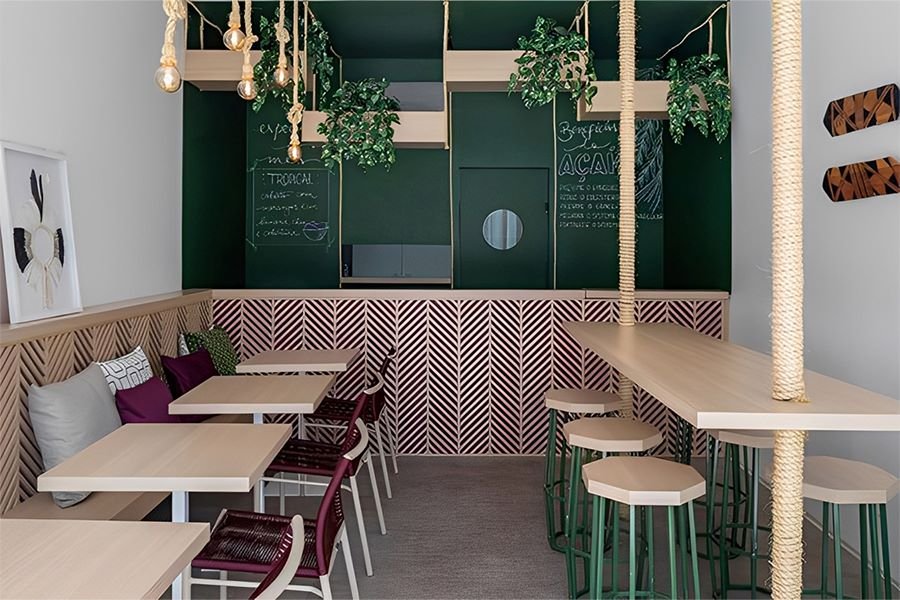
Music has a transformational influence in interior design of restaurants. Take into account gentle music in a low key to create a romantic evening to promote close dialogues. On the other hand, fast music may also be played to cheer a person up. Make sure that the music is in line with the theme and target audience of the restaurant. Cooperation with local musicians or compiling playlists that can be related to the idea. Be consistent about the type of music played to develop brand awareness. When the restaurant has a certain style of music that diners identify with it, it can make up its brand name.
19. Floor Tiles with Personality
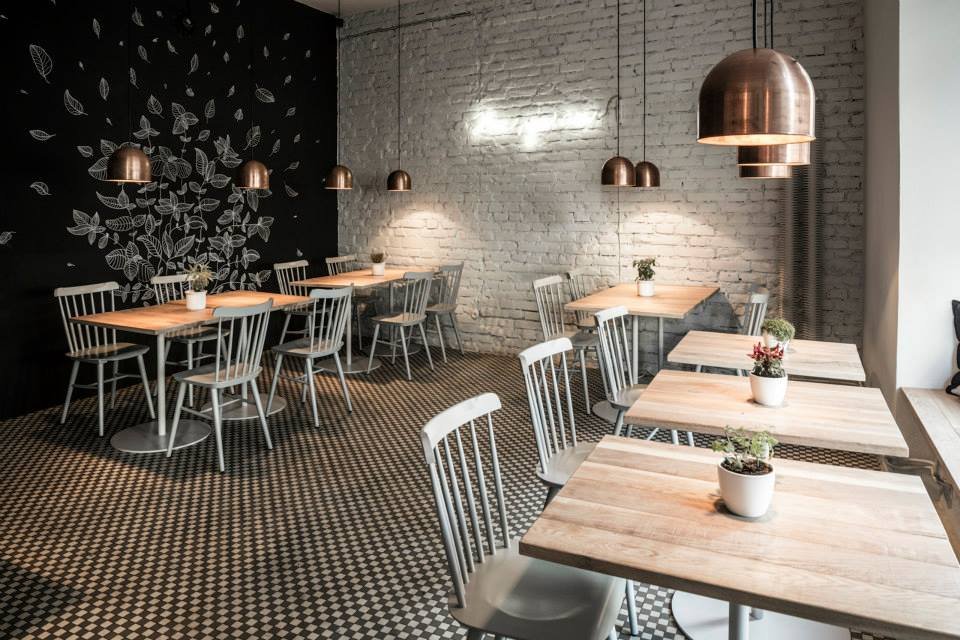
Bold tiles are the best to visually segregate space and add a sense and vitality to your design. An open plan or a tight space can be outlined either with or without walls with various tile patterns. Patterned tiles may be used to give it a vibrant and artistic touch, and wood-finish vinyl may give it a warm and natural look with the added advantage of being durable and low-maintenance. Not only does the addition of style and functionality enhance the aesthetic beauty of the product, but also ensures that the product lasts longer when put into its day-to-day use.
 English